
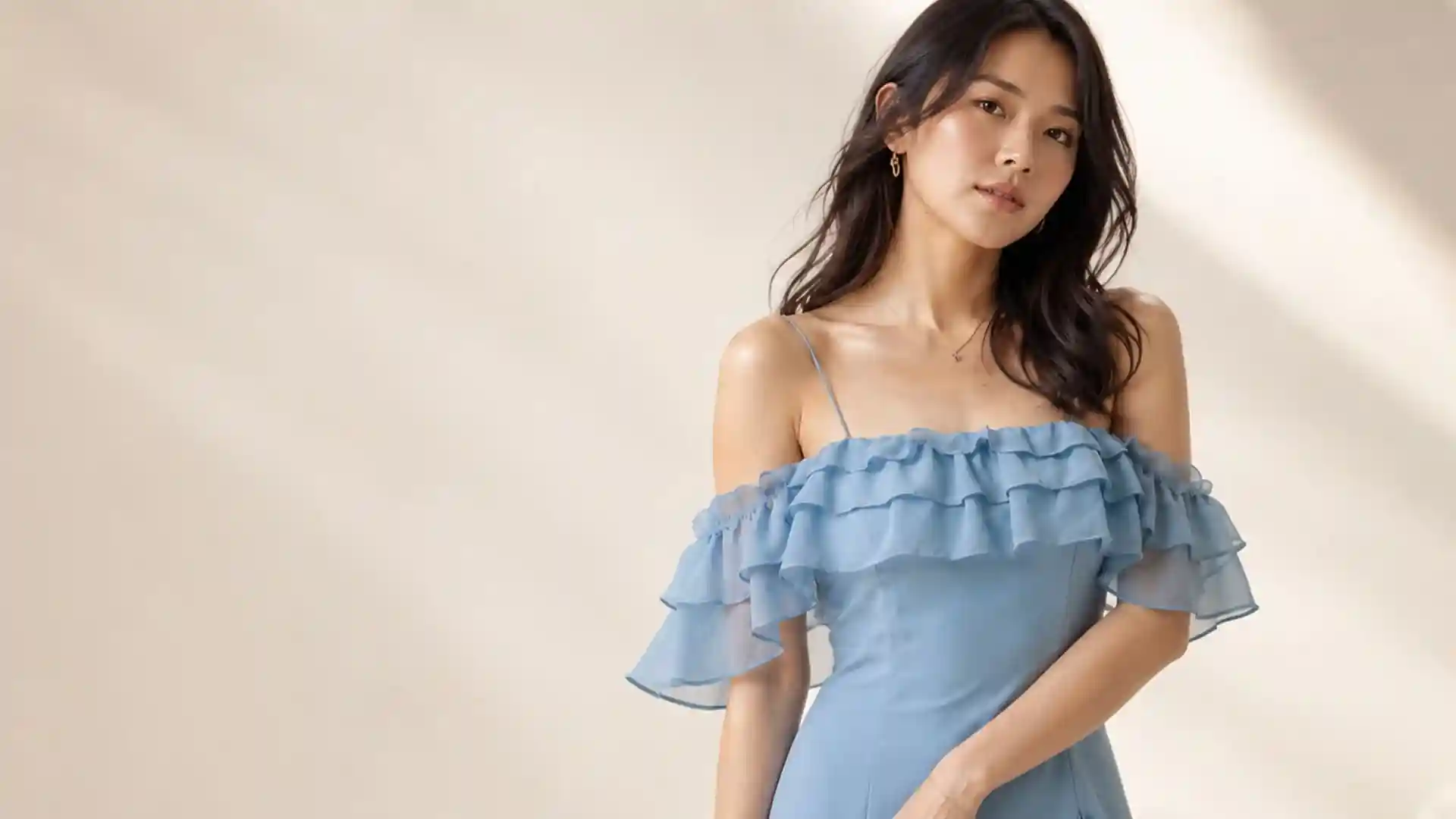
Outfit repetition comes with its own kind of strange pressure. When you know that the same people will see you, it’s natural that you’ll hesitate to wear the same dress, no matter how memorable it is. Thus, the natural route to having good style seems to be wearing a different outfit for every other occasion.
However, repetition can actually do the opposite. When you’re wearing the same dress multiple times, you get an opportunity of understanding its shape, experimenting different combinations, and discovering with styling choices that actually suit you. So, don’t just depend on a constant stream of new clothing, rather you develop more confidence in what you already own.
A repeated dress is not automatically equal to a repeated outfit. Your personal style ends up being more intentional when you learn to revisit familiar pieces.
You’re still learning about a dress, when you’re wearing it the first time. You understand different aspects about it like how the fabric moves, whether the neckline shifts or not, which shoes work with the hemline, and whether the bag that you selected complements the proportions or not.
You know considerably more by the second or third wear. Perhaps you realize the dress looks better with simpler accessories. Maybe you discover that flat shoes create a more balanced silhouette than the heels you originally chose. You might find that rolling the sleeves or adding a belt changes the entire shape.
Repeating clothing gives you information. Instead of considering every outfit as a one-time experiment, you can use previous experience to make the next version stronger.
It is easy to think of a distinctive dress as a complete outfit. However, the dress is only the foundation. Shoes, bags, outer layers, jewelry, belts, and even styling details can influence how it appears. Consider a simple midi dress.
Pair it with flat shoes and a relaxed shoulder bag, and it can feel suitable for a casual afternoon. Add structured footwear and a smaller bag, and the same dress may feel more polished. Introduce a lightweight outer layer, and the proportions change again. The dress remains identical, but the overall impression changes.
Recognizing this distinction allows you to see individual garments as flexible styling tools rather than finished outfits.
When the main garment remains constant, accessories become easier to evaluate. Suppose you wear the same dress three different ways. During the first outing, you choose bold earrings. During the second, you use a belt. During the third, you switch to a different bag and footwear combination.
You can now compare the results. Which version felt balanced? Which accessories competed with the dress? Which combination felt effortless? This kind of comparison is difficult when every part of your outfit changes simultaneously.
Repetition gives you a consistent foundation, making it easier to understand the impact of smaller styling decisions. Over time, that knowledge can influence how you style the rest of your wardrobe too.
A dress may appear versatile when you purchase it, but repeated wear reveals whether it actually is.
The more ways you successfully wear a dress, the more useful it becomes within your wardrobe. This also helps when making future purchasing decisions. Instead of evaluating a dress only by how appealing it looks on its own, you begin thinking about how many realistic styling possibilities it offers.
Personal style rarely develops through constantly wearing unrelated outfits. It usually emerges through patterns. Perhaps you repeatedly prefer defined waists. Maybe you like longer hemlines, simple necklines, softer fabrics, or particular combinations of accessories.
Repeating dresses allows these preferences to become clearer. When you wear something several times and continue enjoying it, that tells you something useful about your style. When another dress requires constant effort to make it feel right, that provides information too. Eventually, you begin recognizing the shapes, details, and styling choices that consistently work for you. That knowledge can make your wardrobe feel more coherent.
Some mornings are not the right time for an elaborate wardrobe experiment. You need to get dressed and continue with your day. A familiar dress can make that considerably easier. Because you have already worn it, you know how it fits and which accessories work. You know what footwear feels appropriate and whether you need an additional layer.
That reduces decision-making. Importantly, familiar does not have to mean dull. You can rely on a combination you already know works or change one element when you want something slightly different. Having a few dresses you understand well can make everyday dressing faster without removing creativity from your wardrobe.
If you want to repeat a dress without creating exactly the same outfit, change one major element. For example, keep the dress but switch the footwear. Next time, keep the footwear and change the outer layer.
On another occasion, introduce a different bag or belt. Changing one element at a time helps you understand which details have the greatest effect on the outfit. It also prevents overstyling. When people deliberately try to make a repeated dress look different, there can be a temptation to change everything at once. The result may feel less natural than the original outfit. Small changes are often enough.
One dress can take on different characteristics depending on what surrounds it. A flowing dress paired with delicate accessories may emphasize softness and movement. Pair that same dress with more structured pieces, and the contrast can create a sharper appearance.
Likewise, a structured dress does not always need equally structured accessories. Relaxed footwear or a softer bag can reduce its formality. Experimenting with contrast allows you to move beyond obvious styling combinations. The goal is not necessarily to disguise the fact that you are repeating a dress. Instead, it is to explore different sides of the garment.
Your frequently repeated dresses contain useful information about what you actually wear. Look at the dresses you instinctively choose again. What do they have in common? Perhaps they are easy to move in. Maybe they work with several pairs of shoes. Their colors might coordinate easily with your existing accessories. Their silhouettes may suit many of the situations you encounter.
Now compare those qualities with the dresses you rarely wear. This exercise can reveal the difference between clothing you admire and clothing that actually supports your lifestyle. Future shopping can then become more intentional because you have real evidence of what earns repeated wear.
A dinner, gathering, celebration, or weekend plan does not automatically require a dress nobody has previously seen. Instead of asking, “What haven't I worn yet?” consider asking, “What do I already own that would work well here?” This changes the objective.
You quit searching for novelty simply for the sake of novelty and start focusing on suitability. Sometimes the right choice will be something new. Other times, it will be a dress you have already worn several times because its fit, style, and function make sense for the occasion. That is not a styling failure. It is knowing your wardrobe.
Repeating a dress is not the opposite of having style. It can actually be one of the ways you develop it. Every repeated wear gives you another opportunity to understand proportions, accessories, layering, color combinations, and your own preferences. You learn which dresses adapt easily and which ones have narrower roles.
More importantly, you begin separating personal style from constant novelty. A strong wardrobe is not defined by how rarely you repeat clothing. It is defined by how effectively you use what you have. So when you find yourself reaching for the same dress again, do not automatically put it back because you wore it recently. Try different shoes. Change the bag. Add or remove a layer. Adjust the accessories. Experiment with the silhouette.
The dress may be familiar, but the styling lesson does not have to be. Sometimes wearing the same thing again is exactly how you discover a better way to wear it.